Selected Engagements
Where his voice has traveled.
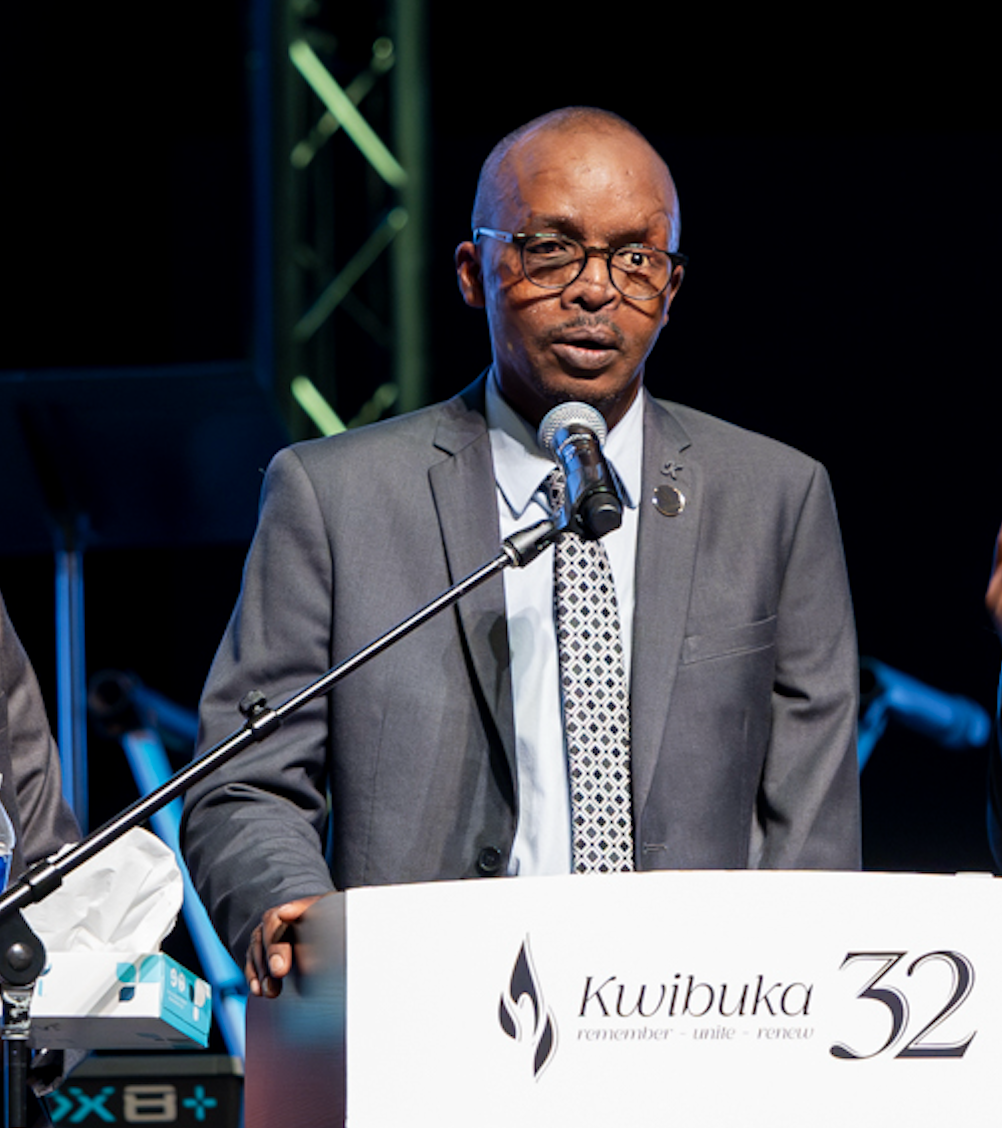
Universities, gatherings, conferences and memorials — from a hill in Mugina to the halls of the world, carrying forty-three names into every room. He speaks in French and English, to audiences of thirty or three thousand.
Rwanda
- Kwibuka National Commemorations
- University of Rwanda
Europe
- European Parliament
- UNESCO, Paris
- Sorbonne Université
- Mémorial de la Shoah
Asia & Beyond
- United Nations
- Peking University, Beijing
- Shanghai International Studies University
Keynote Topics
What he brings to a room.
Resilience After Unimaginable Loss
How a fifteen-year-old rebuilt a life after losing forty-three family members in a single afternoon — and what resilience actually costs.
Lessons from the 1994 Genocide Against the Tutsi
A hundred days, more than one million dead, and the mechanics of how ordinary neighbours became killers.
Leadership When Humanity Is Tested
The people who chose to hide, warn, and protect — and what their choices demand of leaders today.
Preventing Genocide: Recognizing the Warning Signs
Dehumanizing language, lists, propaganda, and indifference: the sequence he watched unfold on his own hill.
Fighting Genocide Denial
Why denial is the final stage of genocide, and how institutions and classrooms can answer it with evidence.
Forgiveness, Healing, and Reconciliation
What reconciliation looks like when the killers were neighbours — honest, unsentimental, and hard-won.
Invite Him
Universities, gatherings, conferences, memorials.
Révérien speaks as a survivor, an author, and an inspirational voice — shaping each talk to the room he is invited into.
Universities & Schools
Lectures and classroom sessions for students of history, law, human rights and journalism — testimony that turns a chapter in a textbook into a person standing in front of them.
Conferences & Summits
Keynotes for international conferences, leadership summits and professional gatherings, framed around resilience, moral courage and the cost of indifference.
Memorials & Commemorations
Kwibuka and remembrance ceremonies, memorial museums and interfaith services — words held with the dignity the day requires.
Inspirational Keynotes
A survivor's story of rebuilding a life from nothing: hope after loss, purpose after despair, and the quiet decision to keep living well.
Community Gatherings
Diaspora associations, faith communities, youth groups and civic assemblies — intimate rooms where questions can run long.
Workshops & Q&A
Extended sessions on recognizing early warning signs of genocide and answering denial with evidence, built for educators and students.
Audiences
Wherever people are willing to listen.
A talk usually runs 45–60 minutes, followed by questions — the part he values most, especially with students. Sessions can be shaped around a commemoration, a curriculum, or a leadership programme.
Invite Révérien to speak- Universities, colleges and schools
- Commemorations and memorial ceremonies
- Conferences, summits and symposiums
- Community gatherings and civic events
- Parliaments and public institutions
- NGOs, human rights and peacebuilding organizations
For Organizers
Questions before you invite him.
Practical answers on venue, format and audience fit. Anything not covered here, ask directly — he answers personally.
What kind of venues does Révérien speak in?+
Lecture halls and university auditoriums, conference stages, memorial sites and museums, places of worship, parliament chambers, community centres and school assembly halls. He has spoken to rooms of thirty and to audiences of several thousand, and adapts to both.
How long is a typical talk?+
A keynote usually runs 45–60 minutes, followed by 20–30 minutes of questions — the part he values most. Shorter 20–30 minute commemoration addresses and longer half-day workshops with students are both possible.
Which languages does he speak in?+
French and English. He can also work with an interpreter where an audience needs another language, and slides or handouts can be prepared bilingually.
Can he speak remotely?+
Yes. Video keynotes and virtual classroom sessions are available for institutions outside Europe or with limited travel budgets, though he prefers to be in the room whenever it is possible.
Is his testimony appropriate for students?+
Yes, and students are among his most frequent audiences. For secondary-school groups he adjusts the level of graphic detail while keeping the history honest, and works with teachers beforehand to align with the curriculum and prepare pupils.
Can the talk be tailored to our theme?+
Always. Sessions are shaped around a commemoration, a course, a human-rights programme, or a leadership summit's theme — resilience, moral courage, prevention, denial, reconciliation. Share your programme and he will build the talk to fit it.
What does the organizer need to provide?+
A microphone, a projector or screen for photographs, a seated position if the session runs long, and a quiet room beforehand. For travel outside Switzerland, transport and accommodation are arranged with the host.
How far in advance should we book?+
Two to three months is comfortable; commemoration season around April fills earliest. Short-notice requests are still worth sending — availability sometimes opens.
Are his books available at the event?+
Yes. Copies of Génocidé / Genocide: My Stolen Rwanda can be arranged for sale and signing after a talk, which many universities and memorial events choose to include.